Denmark's Three-Day Crisis Preparedness Advice for Households
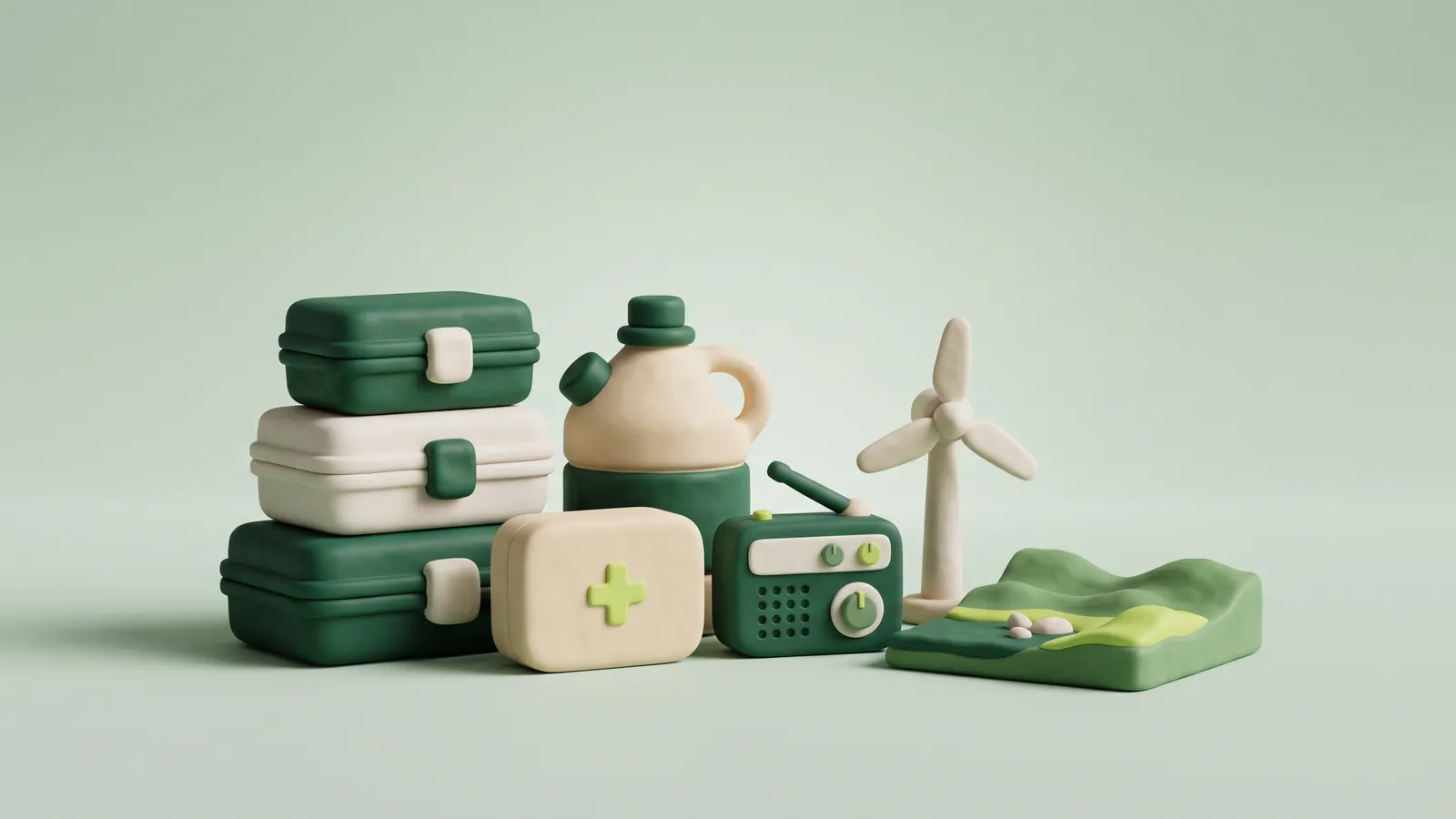
Quick answer: Danish authorities ask every household to be able to manage on its own for three days if a crisis strikes. The core advice is 3 litres of drinking water per person per day (9 litres each for three days), three days of food that keeps without a fridge, three days of medicine and a first-aid kit. Add a battery, wind-up or solar FM radio, a power bank, a physical payment card and a little cash. The advice was launched in June 2024 and is now run by the Danish Agency for Societal Security (SAMSIK). It was still three days in late 2026.
Where the advice came from
The Danish Emergency Management Agency (Beredskabsstyrelsen) published Forberedt på kriser (“Prepared for crises”) with a new checklist in mid-June 2024. The Danish encyclopaedia Lex dates the launch to 17 June 2024. The advice was written with a broad group of Danish authorities and presented as their shared view of how people should prepare.
The pamphlet was then sent to people’s Digital Post inboxes, Denmark’s official online mailbox. That left a gap: in September 2024 a Danish MP pointed out in Altinget that people exempt from Digital Post, many of them elderly, had never received it. Printed copies are available from local libraries, and translations exist in 12 languages, including English.
The reasons given were practical, not alarming. They included more frequent extreme weather, the risk of cyber attacks and sabotage given Europe’s security situation, and ordinary accidents or technical failures.
Who is in charge now
On 29 January 2025 Denmark set up a new agency, the Styrelsen for Samfundssikkerhed (SAMSIK), under the Ministry for Societal Security and Emergency Preparedness. It sits alongside Beredskabsstyrelsen, which still handles major incidents. Advice to citizens is part of SAMSIK’s remit, and the official home-preparedness pages now live at samsik.dk/forberedt.
Why three days, not a week?
Sweden and Norway ask for a week, so why does Denmark ask for three days? The pamphlet says the period was set by the emergency agency with other authorities. It draws on the National Risk Assessment and on how long realistic crises are likely to last. SAMSIK’s FAQ adds that each country’s geography and weather differ, and that Finland and Lithuania also use three days. The authorities say they watch the threat picture closely and will change the advice if needed.
The pamphlet also encourages more if you can manage it. If you have the time, space and money, a bigger stockpile is a good idea. That is especially true if you live somewhere exposed, such as a low-lying coastal area, or rely on essential medicines.
What the guidance asks households to keep
| Area | What Danish authorities suggest |
|---|---|
| Drinking water | 3 litres per person per day, so 9 litres each for three days (about 2.4 US gallons) |
| Food | Three days of food that keeps outside the fridge and needs no oven or hob |
| Medicine | At least three days’ supply, plus a first-aid kit |
| Iodine | Tablets for people under 40, and pregnant or breastfeeding women |
| Hygiene | Toilet paper, hand sanitiser, wet wipes, pads and tampons |
| Heat | Blankets, duvets, warm clothes; stay mainly in one room |
| Information | An FM radio that runs on batteries, a crank or solar |
| Power and light | Power bank, torch, candles, matches, batteries |
| Payment | One or more physical payment cards (know your PINs), plus some coins and small notes |
Water
The 3-litre figure covers drinking and preparing food. Remember pets too.
- Bought bottled water should be kept cool and dark and used by its expiry date.
- Tap water in a sealed, food-safe container keeps for several months in a cool, dark place.
- Change stored water regularly. Use the old water on plants, then wash and refill the container.
For larger households or hot weather, see our guide on how much water to store.
Food
Choose food your household eats every day and likes, such as tinned food and crispbread. You don’t have to buy it all at once: add a few long-life items to your normal shop, then use and replace them. If you store rice or pasta, make sure you can boil water without power or mains gas, for example on a camping stove or barbecue.
Safety note: the guidance warns never to use a grill or camping stove indoors or in a partly enclosed space, because of the risk of carbon monoxide poisoning.
Heat and light
If the heating fails in cold weather, use blankets, duvets and warm clothes. Keep the household mainly in one room. Put candles and other heat sources on a solid surface, away from curtains and rugs.
Phones, radio and warnings
A mobile phone matters in most crises, so keep a charged power bank. In a big or long power cut, phone and internet networks may fail. That is why the advice includes an FM radio that runs on batteries, a crank or solar. The pamphlet notes that many people already have one in their car.
Authorities can warn you through outdoor sirens, the S!RENEN phone alert system and emergency messages. If you hear a siren, go indoors and follow DR or TV 2. If other systems are down, DR broadcasts the authorities’ emergency announcements. Call 1-1-2 only for real emergencies.
Payments
Have at least one physical payment card in case the internet is down or phone payments fail, and make sure you remember the PIN. The guidance also suggests a small amount of cash in coins and low-value notes.
Think about your situation
The pamphlet asks you to think about:
- Special needs: babies, older or sick family members, and pets.
- Where you live: coastal or low-lying homes may flood, so know where to get sandbags.
- Transport: what you will do if trains or roads are disrupted.
- Neighbours: who nearby might need help, and keeping key phone numbers on paper.
2025–2026: what has changed
The three-day rule has stayed the same. What changed is the push to get people to act on it:
- January 2025: SAMSIK was set up. It now publishes the home-preparedness advice.
- December 2025: a Megafon survey for SAMSIK found 84% of Danes knew the three-day advice. 65% said they were preparing, and 86% expected their household could cope in a crisis.
- February 2026: the government published a short booklet, Totalberedskab (“total preparedness”). It says Denmark faces its most serious and complex risk picture since the Second World War. It repeats the three-day advice: 9 litres of water per person, three days of food and medicine, an FM radio, a physical payment card and cash. It also promotes a new campaign urging people to think critically before sharing stories that may be disinformation.
- May 2026: Denmark held its first national preparedness week (Beredskabsugen). It ran alongside the annual siren test and is planned for the first week of May each year.
What this means wherever you live
Denmark’s list is short and concrete, and it suits almost any household. If you are starting from nothing, aim for its numbers first: 9 litres of water and three days of food per person, plus medicine. Then think about a longer buffer, as Sweden and Norway suggest. Our posts on Sweden’s one-week brochure and Norway’s one-week advice show what that looks like.
To see where you stand today, check how many days your household would last. It’s free.
Checklist: Denmark-style three days
- 9 litres of drinking water per person (3 litres a day), plus water for pets
- Three days of long-life food that needs no cooking
- A camping stove or barbecue for outdoor use only, if you store food that needs boiling
- At least three days of medicine, and a first-aid kit
- Iodine tablets for under-40s, and pregnant or breastfeeding women
- Toilet paper, hand sanitiser, wet wipes and period products
- Blankets, duvets and warm clothes
- An FM radio that runs on batteries, a crank or solar
- A charged power bank, torch, candles, matches and batteries
- A physical payment card (and its PIN), plus some coins and small notes
- Key phone numbers written on paper
Small steps add up. Do what you can, help your neighbours, and follow the advice of your local authorities.
Sources & further reading
- SAMSIK – Forberedt på kriser (official home-preparedness pages, Danish)
- SAMSIK – Be prepared for a crisis (English pamphlet, PDF)
- SAMSIK – Questions and answers on home preparedness (Danish)
- SAMSIK – Beredskabsugen (national preparedness week, Danish)
- borger.dk – Forberedt på kriser (Danish)
- Danish Government – Totalberedskab booklet, February 2026 (Danish, PDF)
- Lex – Beredskabsstyrelsens kriseråd til borgerne (Danish)
- Altinget – The organisation under the Ministry for Societal Security and Emergency Preparedness is in place (Danish)
- Altinget – Pia Kjærsgaard: Are care homes ready if a crisis hits? (Danish, September 2024)
- The Copenhagen Post – Three days’ worth of supplies: Denmark issues guidelines (June 2024)
Every fact in this post was checked against the sources listed above on 1 November 2026. Advice changes: always follow your local authorities.
Put it into numbers
See how many days your household would last today, and what it costs to reach your goal.