Flood and Flash Flood Preparedness: A Household Guide
Quick answer: Sign up for flood warnings, keep a flood kit and your documents in a waterproof bag, and know how to turn off your gas, electricity and water. Never walk or drive through floodwater: Ready.gov says 15 cm (6 inches) of moving water can knock you down and 30 cm (1 foot) can sweep a car away. After a flood, drink only bottled, boiled or treated water until the authorities say the tap water is safe.
Floods are among the most common emergencies a household can face, and flash floods can arrive within hours or less. The good news is that most of what keeps people safe is simple and cheap. This post looks at what recent floods teach us and what official agencies ask households to do.
What recent floods show
- Valencia, Spain, 29 October 2024. Torrential rain from a weather system known locally as a DANA filled normally dry gorges and riverbeds. Reuters reported that the flash floods swept away bridges, cars and people and swamped homes and underground car parks. The official toll was 237 deaths, 229 of them in the Valencia region. Some relatives say the phone alert came when many buildings were already under water.
- Texas, United States, 4 July 2025. Before daybreak, the Guadalupe River rose about 8 metres (26 feet), catching many people asleep. The Associated Press reported at least 135 deaths across Texas, most of them in Kerr County, which had no flood warning system.
- Nepal, August 2026. Reuters reported on 28 August 2026 that the death toll from a flash flood earlier that week had reached 469, according to Nepal police.
Three lessons stand out. Flash floods can come at night. Cars and underground spaces are deadly places to be. And waiting for an official alert is not always enough, so you need your own plan and your own way of hearing warnings.
Understand the warnings
Learn what your country’s warning levels mean before a flood. In England, the Environment Agency uses three:
| Level | Meaning | Usually issued | What to do |
|---|---|---|---|
| Flood Alert | Flooding is possible | 2–12 hours ahead | Get ready: check your plan, gather documents and medicines, avoid driving through water |
| Flood Warning | Flooding is expected | 30 minutes to 2 hours ahead | Act now: move people, pets and valuables to higher ground, turn off utilities if safe |
| Severe Flood Warning | Danger to life | When flooding threatens life | Stay somewhere safe, be ready to evacuate, call 999 if in immediate danger |
In England you can register for free warnings by phone, text or email, and Floodline is open 24 hours on 0345 988 1188. In the US, Ready.gov suggests signing up for community alerts, the Emergency Alert System and NOAA Weather Radio. If you are told to evacuate, go immediately.
Never walk or drive through floodwater
This is the single most important rule, and every agency says it. The figures are startling:
- Ready.gov: 15 cm (6 inches) of moving water can knock you down, and 30 cm (1 foot) can sweep your vehicle away.
- UK water safety guidance (2025): fast-flowing water at just ankle depth can knock you off your feet, and 30 cm of water, up to the wheel nuts, is enough to float a car.
Floodwater is also cold, can be electrically charged if power lines are down, and usually contains sewage. GOV.UK warns it can hide debris, broken roads and open drain or manhole covers. Ready.gov’s slogan sums it up: “Turn Around, Don’t Drown!”
If you are trapped in a car in fast-moving water, Ready.gov says stay inside, and get onto the roof if the water is rising. UK guidance says that if the wheels are still on the ground and you can safely reach dry land, leave immediately; if not, call 999. Stay off bridges over fast-moving water.
Make a flood plan
GOV.UK suggests a written personal flood plan, kept somewhere safe with spare medicines, important documents and contact details. Your plan should cover:
- where you would move valuables and sentimental items (upstairs, or high shelves)
- how to turn off gas, electricity and water, and where the switches and valves are
- where your household would go if you had to leave, including pets
- who will check on older relatives or neighbours
Ready.gov also suggests clearing drains and gutters. In the US, standard home insurance does not cover flooding, and a new flood insurance policy usually takes around 30 days to start, so do not leave it until a storm is forecast. Our family emergency communications plan helps you agree how to reach each other.
Build a flood kit
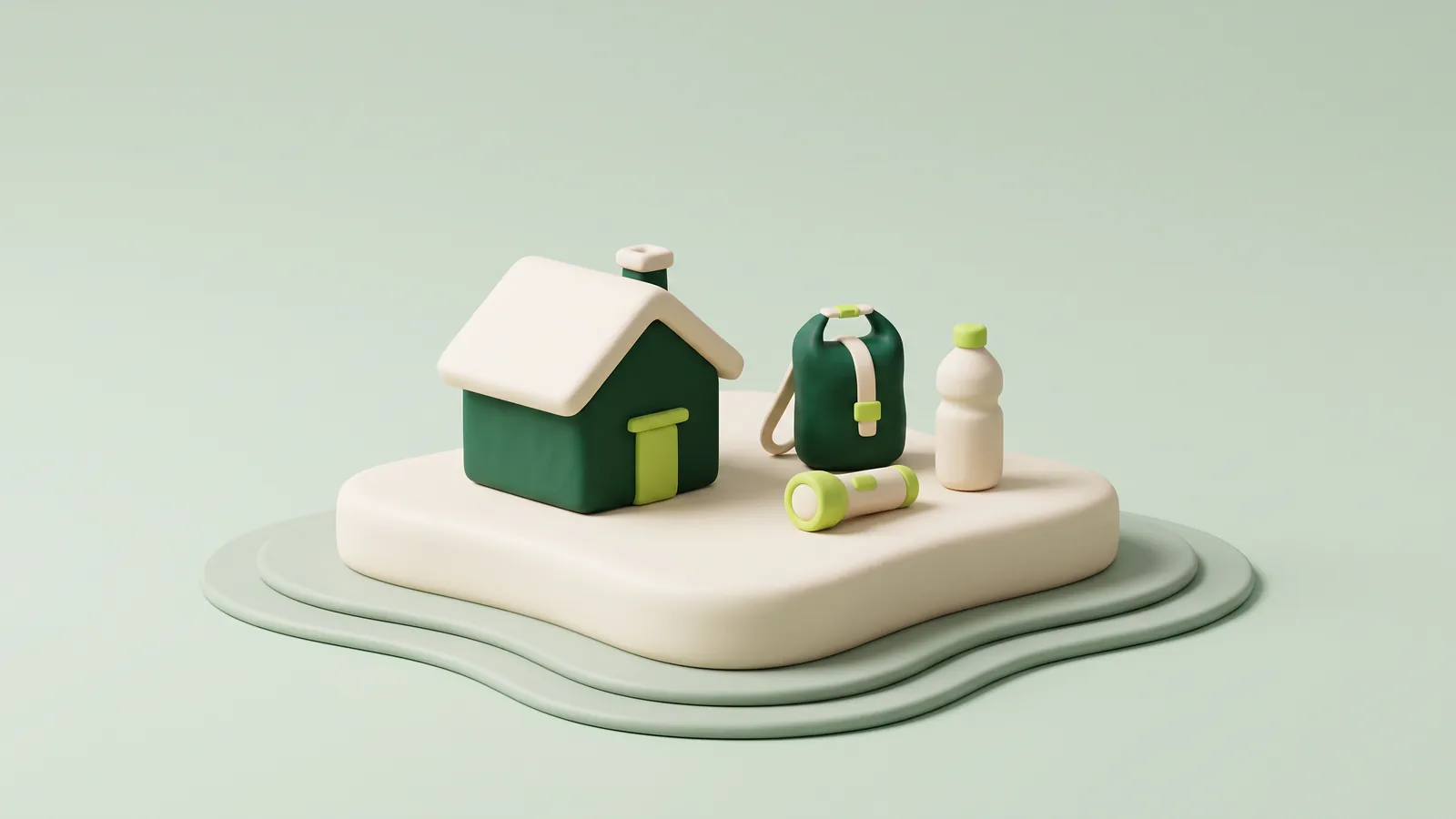
A flood kit is a grab bag you can carry upstairs or out of the door in minutes. Start with a 72-hour emergency kit and make sure it includes:
- Water: the CDC suggests at least 1 US gallon (about 3.8 litres) per person and per pet, per day
- Food that needs no cooking, and a manual can opener
- Medicines and copies of prescriptions
- Torch, battery radio and power bank, with spare batteries
- Waterproof bag or container for documents: IDs, insurance policy, bank details, medical information
- Rubber boots and waterproof gloves
- Warm clothes and blankets
- Cash in small notes
- Items for babies or pets, if you have them
Protect your documents. Ready.gov advises keeping documents in a waterproof container and making password-protected digital copies. A sealed plastic wallet inside a dry bag works well, and it keeps everything in one place if you need to leave quickly.
Safe drinking water after a flood
Floods often contaminate drinking water supplies. Until your water supplier or health authority says tap water is safe:
- Drink bottled water with an unbroken seal, or water you have boiled or treated.
- Boil water at a rolling boil for 1 minute (3 minutes above about 2,000 metres, or 6,500 feet), according to the CDC.
- If you cannot boil it, Ready.gov says add 1/8 teaspoon of regular unscented household bleach (5.25–6% sodium hypochlorite) per US gallon (3.8 litres), stir and wait 30 minutes.
- Use safe water for everything that goes in your mouth. The WHO advises boiled water for drinking, brushing teeth and cleaning wounds.
- For babies, the CDC advises ready-to-use formula where possible.
Boiling does not remove chemicals or fuel. If you are told the water is “do not drink” rather than “boil water”, use only bottled water. Your stored water is your safety margin here, so see how much water to store.
Food, power and clean-up after a flood
- Food: the CDC says throw away any food that may have touched floodwater, including anything in cardboard, non-waterproof packaging or screw-cap bottles, and any damaged or home-canned tins. Undamaged commercial cans and pouches can be saved if you wash and sanitise them. The WHO says to throw away perishable food that has been without refrigeration for more than 4 hours.
- Electricity: do not touch electrical equipment if it is wet or you are standing in water, and have gas and electrics checked before using them.
- Generators: never use a petrol or diesel generator indoors.
- Clean-up: the CDC advises rubber boots and plastic gloves, and the WHO suggests keeping children away from flood-contaminated mud until a week after the water goes down.
- Returning home: Ready.gov says wait until the authorities confirm it is safe.
Your flood checklist
- Flood warnings set up for your address
- Personal flood plan written and shared
- Know how to turn off gas, electricity and water
- Grab bag packed and easy to reach upstairs
- Documents in a waterproof bag, with digital copies
- Water for at least 3 days per person and pet
- Torch, radio, power bank and spare batteries
- Rubber boots and gloves
- Household rule: never walk or drive through floodwater
See how many days your household would last on your current water and food with the free calculator. When flooding is forecast, follow the advice of your local authorities and emergency services.
Sources & further reading
- Ready.gov – Floods
- GOV.UK – Flood alerts and warnings: what they are and what to do
- GOV.UK – What to do before or during a flood
- GOV.UK – Prepare for flooding
- National Water Safety Forum – Flooding safety advice (2025, PDF)
- CDC – Drinking water advisories: an overview
- CDC – Keeping food safe after a disaster or emergency
- WHO Europe – Public health advice in the aftermath of flooding
- Reuters via Chronicle.lu – Spain marks floods anniversary with state funeral, October 2025
- PBS NewsHour (AP) – Texas July 4 floods: officials say 3 still missing
Every fact in this post was checked against the sources listed above on 1 November 2026. Advice changes: always follow your local authorities.
Put it into numbers
See how many days your household would last today, and what it costs to reach your goal.