Denk Vooruit: the Dutch 72-Hour Emergency Kit Explained
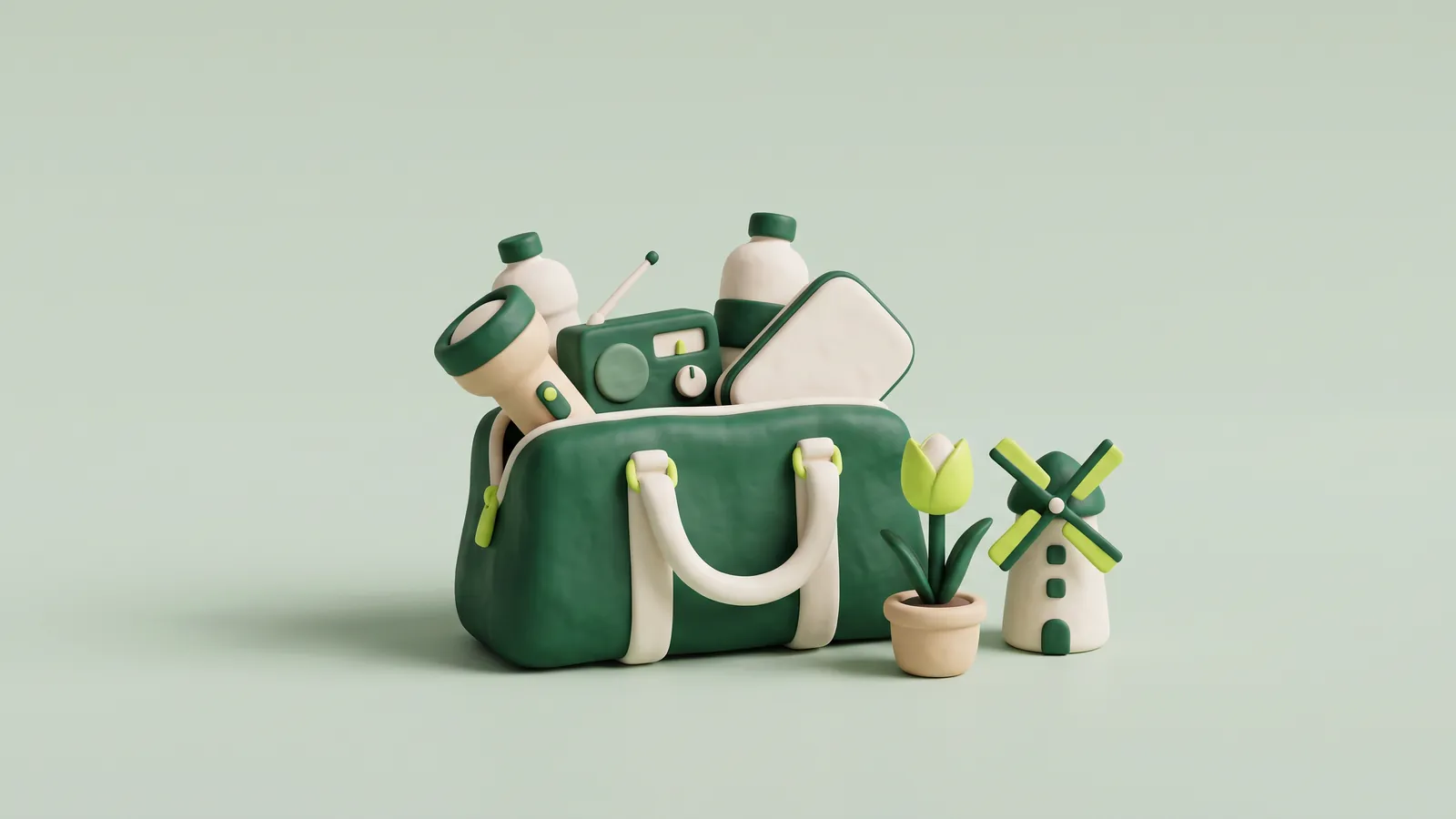
Quick answer: The Dutch government’s Denk vooruit (“Think ahead”) campaign asks every household to be able to cope for 72 hours without electricity, water or internet. Its emergency kit (noodpakket) starts with 3 litres of water per person per day, long-life food, a battery radio, a torch, first aid supplies and cash. Separately, the Dutch payments forum led by De Nederlandsche Bank advises keeping €70 in cash per adult and €30 per child.
In late 2025 more than 8.5 million Dutch households received a printed booklet explaining what to do. Here is what it asks, item by item, and how to use it wherever you live.
What the Netherlands launched in 2025
On 3 November 2025 the government started a multi-year Denk vooruit campaign on television, radio and online. It is coordinated by the National Coordinator for Counterterrorism and Security (NCTV), working with national, regional and local authorities, businesses and community groups.
On 17 November 2025, Justice and Security Minister Van Oosten presented the information booklet Bereid je voor op een noodsituatie (Prepare for an emergency). It was delivered to 8.5 million households between 25 November 2025 and 10 January 2026.
The booklet is also online at denkvooruit.nl in English, German, Polish, French, Arabic, Turkish, Chinese and Spanish, plus Dutch Sign Language and an easy-to-read version.
Why 72 hours?
In a large emergency, such as a widespread power cut, the emergency services cannot be everywhere at once. They go first to the places where help is needed most. For the first 72 hours, most people will need to look after themselves and each other.
The three steps
Denk vooruit boils preparedness down to three steps:
- Make an emergency kit. The supplies you need for 72 hours at home.
- Make an emergency plan. Agree how you will reach each other if phones fail, where you will meet, who picks up the children, and who nearby might need extra help.
- Talk and help each other. Discuss it with family, friends and neighbours. Talking it through makes people less anxious and more likely to help one another.
What goes in the Dutch noodpakket
This is the official Denk vooruit list, in plain English:
| Item | Official guidance |
|---|---|
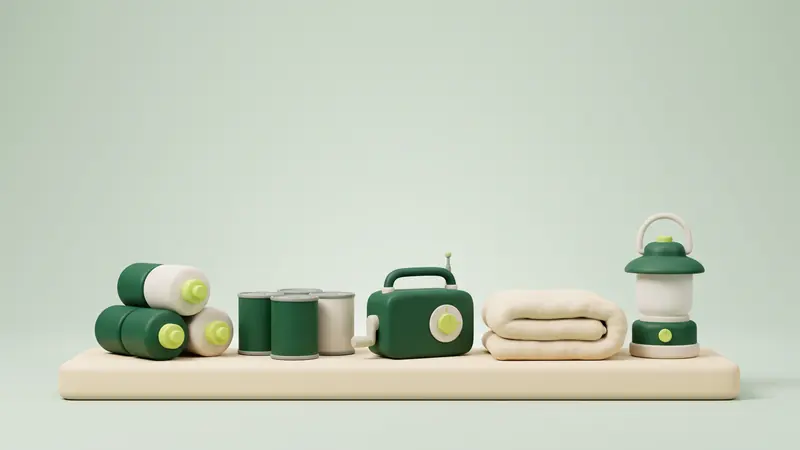
| Bottled water | 3 litres per person per day (9 litres, about 2.4 US gallons, per person for 72 hours) |
| Long-life food | Such as nuts, tinned vegetables and dried fruit |
| Battery radio and phone with power bank | To keep up with the news |
| Torch with spare batteries, candles and matches | Light when the power is off |
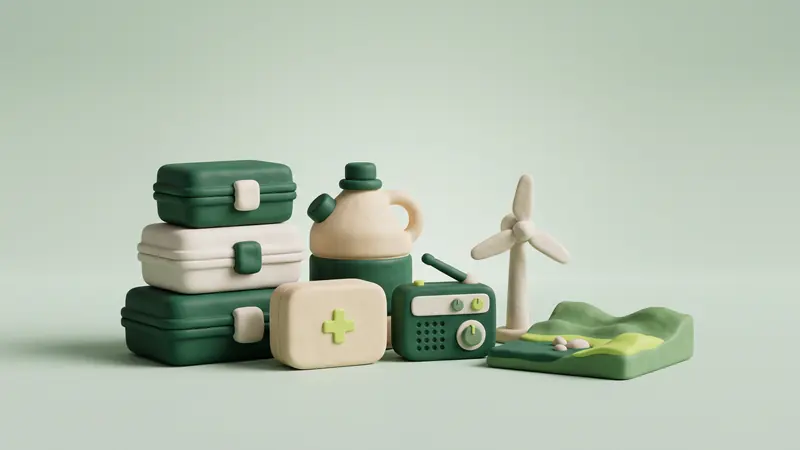
| First aid kit with instructions | For minor injuries |
| Blankets | To stay warm |
| Whistle | To let rescuers know where you are |
| Cash | Card payments may not work |
| Tools | Such as a hammer, saw and pliers |
| Hygiene items | Hand gel, toilet paper, wet wipes, sanitary pads, toothpaste and toothbrush |
| Documents | Copies of ID and a list of important phone numbers |
| Spare keys | For your home and car |
Denk vooruit also asks you to add what your own household needs: medicines, baby food, and food and water for pets. Our guide to babies and pets in emergencies covers those extras in detail.
Where to keep it
- Store everything in one easy-to-reach place.
- Use a waterproof container such as a backpack, so you can grab it if you have to leave quickly.
- Keep a bag in the same spot for keys, ID and cash.
- Check the kit every six months and replace anything past its date.
For a full category-by-category version, see our 72-hour emergency kit guide.
How much cash: the €70 advice
On 20 May 2025, the Netherlands’ national payments forum (Maatschappelijk Overleg Betalingsverkeer, or MOB) published advice on what to do if card and online payments stop working for three days. The MOB brings together De Nederlandsche Bank (DNB), banks, consumer and retail organisations and the Ministry of Finance.
Its advice:
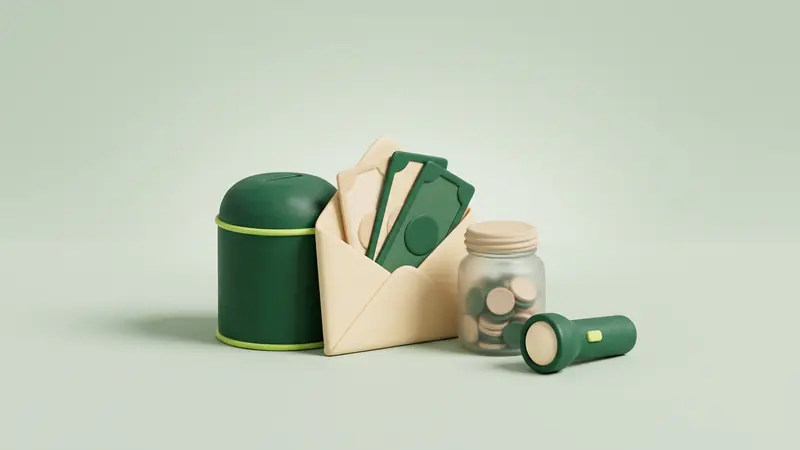
- €70 per adult and €30 per child in cash at home.
- The amounts were calculated by Nibud, the Dutch budget information institute, to cover three days of essentials such as water, food, medicines and transport.
- Keep a mix of low-value notes and coins, so you can pay without needing change.
- Have more than one way to pay: a bank card, a contactless phone payment and a banking app, as different problems can knock out different systems.
So a couple with two children would keep €200 in cash.
In February 2026 DNB reported that 71% of consumers knew the cash advice and 58% kept the recommended amount at home. The amounts stayed the same.
We cover cash in more depth in keeping cash at home for emergencies.
What this means for you, wherever you live
The Dutch list is short and sensible, and it travels well. Almost nothing on it is specific to the Netherlands.
- Water is the big one. At 3 litres per person per day, a family of four needs 36 litres for 72 hours. That is the bulkiest part of the kit, so sort it first. See how much water to store.
- Cash is easy to forget. Card machines and cash machines both need power and networks. A small amount of cash in small notes, in your local currency, is a cheap insurance policy.
- The plan matters as much as the kit. Agree a meeting point and write key phone numbers on paper. Our family emergency communications plan walks you through it.
- 72 hours is a floor. Neighbouring Germany asks for up to 10 days. If you can go further, it gives you more room.
Curious how your home compares? See how many days your household would last with our free calculator.
Your Denk vooruit checklist
- 3 litres of water per person per day, for 3 days
- Long-life food such as nuts, tins and dried fruit
- Battery radio, phone and charged power bank
- Torch, spare batteries, candles and matches
- First aid kit and personal medicines
- Blankets and a whistle
- Cash in small notes and coins (in the Netherlands: €70 per adult, €30 per child)
- Basic tools and hygiene items
- Copies of ID, key phone numbers and spare keys
- Baby and pet supplies if needed
- A household emergency plan, talked through with everyone
- A six-monthly reminder to check dates
Most of this is already in your home. Gather it in one place this week and you are most of the way there. In the Netherlands, follow denkvooruit.nl and your local authorities; elsewhere, follow your national advice.
Sources & further reading
- Rijksoverheid – Government starts Denk vooruit campaign, 3 November 2025
- Rijksoverheid – Minister Van Oosten presents emergency information booklet, 17 November 2025
- Denk vooruit – Put together your emergency kit (noodpakket)
- De Nederlandsche Bank – Cash in your emergency kit
- De Nederlandsche Bank – MOB advice: prepare for three days without card payments, 20 May 2025
- De Nederlandsche Bank – Most consumers know the emergency cash advice, 25 February 2026
Every fact in this post was checked against the sources listed above on 1 November 2026. Advice changes: always follow your local authorities.
Put it into numbers
See how many days your household would last today, and what it costs to reach your goal.