Wildfire Evacuation: How to Pack a Go-Bag and Leave in Time
Quick answer: A wildfire can give you very little time, so keep a go-bag packed before fire season. CAL FIRE’s list includes a three-day supply of non-perishable food and 3 gallons (about 11 litres) of water per person, medicines, copies of documents, a map with at least two evacuation routes, and face masks. Leave as soon as you are told to, or earlier: Victoria’s Country Fire Authority says never to wait for an official warning. For smoke, US and Australian agencies recommend a well-fitted N95 or P2 respirator and a room you can seal off from outside air.
Wildfire evacuations are different from most emergencies. Instead of staying home for days, you may need to be in the car within minutes. That makes preparation in advance the single most useful thing a household can do.
Recent fires and fast evacuations
Los Angeles, January 2025. Two fires started on 7 January 2025. The Palisades Fire began in the morning in Pacific Palisades and burned 23,448 acres (about 9,490 hectares), destroying 6,845 structures. Twelve people died. The Eaton Fire began that evening near Altadena and burned 14,021 acres (about 5,670 hectares), destroying 9,419 structures. Nineteen people died. CAL FIRE recorded both as fully contained on 31 January.
Manitoba, Canada, May 2025. On 28 May 2025, Manitoba declared a provincewide state of emergency as fires spread in the north. More than 17,000 people were to be evacuated, including the whole city of Flin Flon. Premier Wab Kinew described it as the largest evacuation in many Manitobans’ living memory, and the province asked the Canadian Armed Forces to help with transport.
Europe, 2025. The European Forest Fire Information System recorded more than 1 million hectares burned in the EU in 2025, from 7,783 fires across 25 countries. During an August heatwave, 22 major fires in Portugal and Spain alone burned 460,585 hectares. The European Commission noted that fires started as early as March.
Victoria, Australia, January 2026. On 10 January 2026, Premier Jacinta Allan declared a state of disaster, giving authorities the power to force evacuations. Temperatures had passed 40°C (104°F). One fire near Longwood burned nearly 150,000 hectares, and at least 130 structures were destroyed in early counts.
Ready, Set, Go!
CAL FIRE organises its advice into three stages:
- Ready: prepare your home with ignition-resistant materials and clear dead plants to create a buffer of about 30 metres (100 feet) around it.
- Set: write a wildfire action plan and a communication plan, and pack emergency supply kits. Ready.gov adds: learn your evacuation routes and practise them with your household and pets.
- Go: leave early. Cover up against heat and embers, cover your nose and mouth, and take your pets.
What to pack in a wildfire go-bag
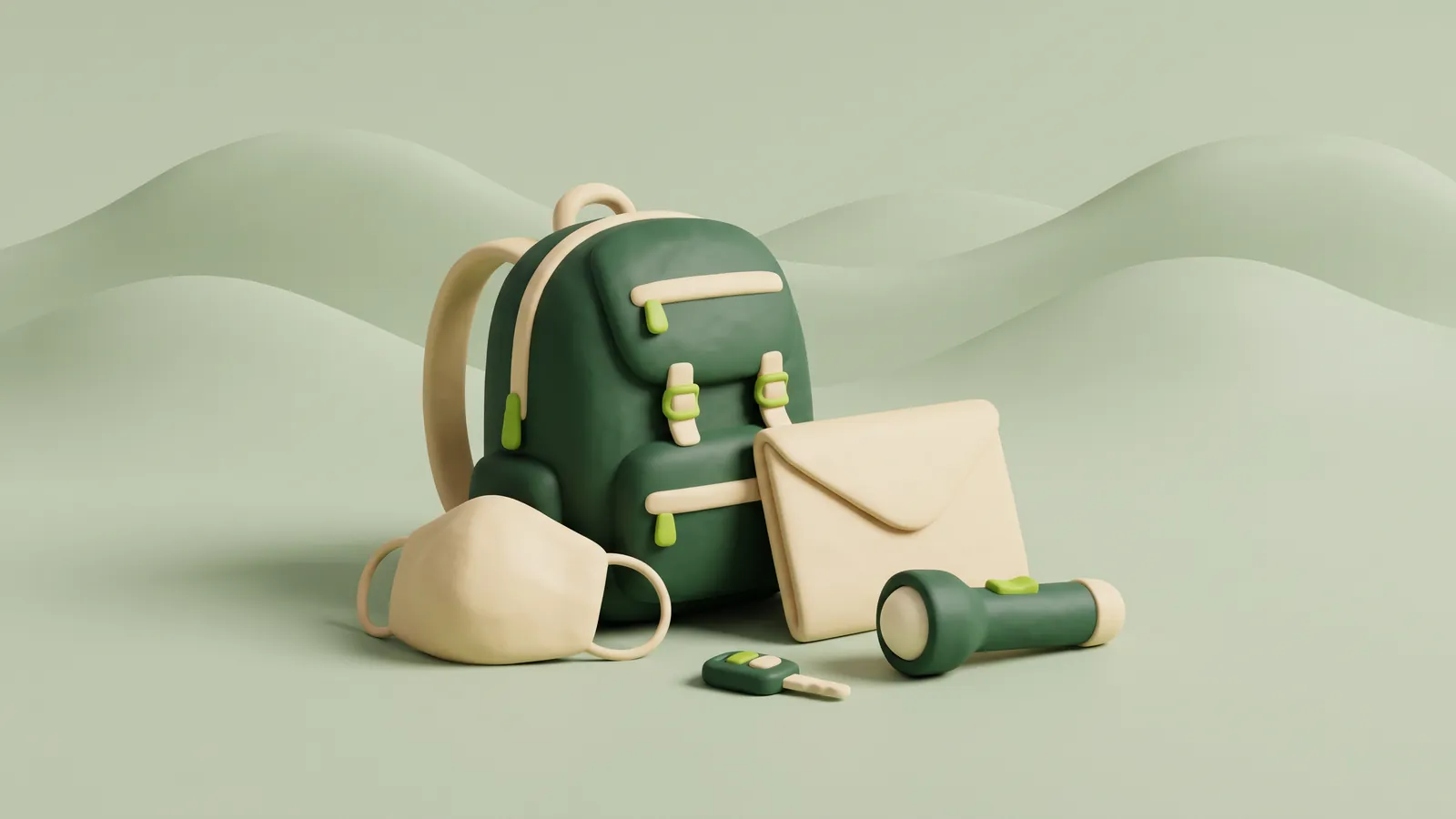
This list combines CAL FIRE’s go-bag items with Ready.gov’s wildfire advice. Keep it light enough to carry, and store it by the door or in the car boot.
| Item | Why it matters |
|---|---|
| Three days of non-perishable food | Shelters and shops may be busy or far away |
| 3 gallons (about 11 litres) of water per person | Drinking and basic washing on the road |
| Map with at least two evacuation routes | Roads close and phone maps may not work |
| Face masks (N95 or P2) | Protection from smoke while you travel |
| Prescriptions, glasses or contact lenses | Pharmacies may be closed or out of reach |
| First aid kit | Minor injuries while leaving |
| Torch, battery radio and spare batteries | Power and mobile networks may fail |
| Change of clothes and toiletries | You may be away for days |
| Copies of important documents | ID, insurance and medical details |
| Cash and cards | Card machines may be down |
| Phone charger or power bank | Alerts and keeping in touch |
| Car keys | Seconds count when you leave |
CAL FIRE also suggests keeping a torch and a pair of shoes next to your bed, in case you have to leave at night.
Protect your documents and medicines
Paperwork is easy to forget in a hurry and hard to replace afterwards. Ready.gov advises keeping insurance policies and ID up to date and storing copies in a secure digital space, as well as in your go-bag. A document folder you can grab in one movement saves time.
Medicines need the same planning. Keep a few days’ supply in the go-bag and a list of what each person takes. Our guide to medications in emergencies explains how to build a safe reserve with your doctor or pharmacist. For small children and animals, see babies and pets in emergencies.
Evacuation warnings and when to leave
Know the words your local authority uses. CAL FIRE’s incident maps use two key terms:
- Evacuation Warning: a potential threat to life or property. People who need more time to leave, and anyone with pets or livestock, should go now.
- Evacuation Order: an immediate threat to life. Law enforcement is ordering you to leave immediately.
Australia uses three levels for bushfires and other hazards: Advice (monitor conditions), Watch and Act (conditions are changing, act now) and Emergency Warning (you are in danger, act immediately).
The key message from fire services is not to wait. Victoria’s CFA says fires can spread and threaten homes within minutes, and grassfires can move at up to 25 km/h. In a 2022 CFA survey, more than half of residents in high-risk areas wrongly believed they would get an official warning. The CFA advises choosing a Fire Danger Rating as your personal trigger to leave, and leaving the night before or early in the morning on high-risk days.
Ready.gov’s advice is the same in plain terms: evacuate immediately if authorities tell you to, and do not return home until they say it is safe. A family emergency communications plan helps everyone know where to meet if you are split up.
Smoke, masks and a clean-air room
Smoke can affect people far from the flames. The US Environmental Protection Agency (EPA) says the most effective protection is to limit time outdoors when smoke is in the air, especially for people with heart or lung disease.
If you need a mask:
- Choose a real respirator. The EPA recommends one marked “NIOSH” and “N95” or “P100”, with two straps that go around the head. In Australia, Victoria’s health department says P2 and N95 respirators filter 94% to 95% of fine smoke particles.
- Get a good seal. It should fit tightly over the nose and under the chin. Facial hair stops a good seal.
- Know the limits. Respirators are not made in sizes for young children. Victoria advises wearing them for only a few hours, and replacing them when they get damp or hard to breathe through. People with heart or lung conditions, and pregnant women, should check with a doctor first.
At home, Ready.gov suggests choosing a room that can be closed off from outside air. Close all doors and windows and run a portable air cleaner.
What this means for you, wherever you live
You do not need to live in a forest for wildfire to matter. Grass and scrub burn too, and smoke can reach people who are nowhere near the flames.
- Pack once, check twice a year. Swap food and water, and check medicines and batteries. Our 72-hour emergency kit guide has a full list.
- Plan two ways out and practise them, including with pets.
- Sign up for local alerts and learn the warning terms where you live.
- Know your wider numbers. A go-bag gets you out; a home stockpile helps you cope if smoke or road closures keep you in. See how many days your household would last with the free calculator.
Your wildfire checklist
- Go-bag packed: food and water for three days, masks, medicines, first aid kit
- Copies of ID, insurance and medical details, plus digital copies
- Map with at least two evacuation routes
- Torch, battery radio, spare batteries and a power bank
- Cash, cards and spare car keys
- N95 or P2 respirators that fit each adult
- A room you can seal off, with a portable air cleaner if possible
- Local alerts set up and warning terms understood
- A personal trigger to leave early on high-risk days
- A meeting place and contact plan for the family
- Torch and shoes by the bed during fire season
Being packed and ready means that if the call comes, you can leave calmly. Always follow the instructions of your local fire service and emergency authorities.
Sources & further reading
- CAL FIRE – Palisades Fire incident page
- CAL FIRE – Eaton Fire incident page
- Global News – Manitoba declares state of emergency over wildfires, 28 May 2025
- European Commission – Record number of wildfires in 2025 calls for stronger EU action, 31 March 2026
- Dawn – State of disaster declared in Australian region as bushfires rage, January 2026
- Ready.gov – Wildfires
- CAL FIRE Ready for Wildfire – Create your go bag
- KRON4 – Ready, Set, Go: CAL FIRE’s advice on preparing for wildfire season
- Country Fire Authority (Victoria) – Don’t wait to act
- US EPA – Protect yourself from wildfire smoke and ash
- Better Health Channel (Victoria) – Face masks for environmental hazards
Every fact in this post was checked against the sources listed above on 1 November 2026. Advice changes: always follow your local authorities.
Put it into numbers
See how many days your household would last today, and what it costs to reach your goal.