Winter Storms and Cold Snaps: Staying Warm When the Power Fails
Quick answer: In a winter power cut, the two big dangers are the cold itself and unsafe ways of keeping warm. Ready.gov asks households to have supplies to stay home for several days without power, and Norway’s DSB suggests planning to manage for up to a week. Gather everyone in one warm room, dress in layers, and only ever run generators and grills outdoors, at least 6 metres (20 feet) from windows and doors. In the Texas winter storm of February 2021, hypothermia caused 158 of the 246 confirmed deaths and carbon monoxide caused 19.
Winter storms can bring down power lines with wind or ice, and extreme cold can push a grid past its limits. When the electricity goes, heating, water pumps and phone networks often follow. Here is what recent events showed, and what official agencies advise.
What recent winter storms showed
Texas, February 2021. The final report by the US energy regulator FERC and the grid body NERC found that more than 4.5 million people in Texas lost power, some for as long as four days. Grid operators cut 20,000 megawatts in rolling blackouts, the largest manually controlled load shed in US history.
The Texas health department later confirmed 246 storm-related deaths. Its report shows how people died, and most of it is preventable:
- 158 deaths were from hypothermia. Risk factors included not wearing enough layers and refusing to go to heated shelters or warming centres.
- 19 deaths were from carbon monoxide poisoning, linked to generators, grills, heaters and vehicles run in enclosed spaces, and ice blocking the vents of gas heaters.
- 10 deaths were from fires, including space heaters placed too close to things that could burn.
- 25 deaths followed worsening illness, including interrupted dialysis or oxygen, and frozen medicines or medical devices.
Storm Éowyn, Ireland, January 2025. At the peak of the storm on 24 January 2025, 768,000 homes, farms, schools and businesses lost power. ESB Networks called the damage unprecedented. Nine days later, on 2 February, about 39,000 customers were still waiting.
Water and communications went down too. On 28 January, RTÉ reported that 74,000 people had no water supply, with 70,000 more at risk, and 77,000 homes and businesses had lost broadband from one provider. The government opened 16 emergency hubs offering water, hot food, showers and phone charging.
United States, January 2026. A major storm on 25 and 26 January 2026 left more than 1 million customers without power at its peak, mostly because of ice on trees and lines in the South. At least 25 deaths were blamed on the weather. Kentucky’s governor urged people without power to go to warming centres.
How to stay warm without power
Official advice from Ireland, Norway and the UK is strikingly similar.
- Use one room. Ireland’s Be Emergency Ready booklet says to close windows and doors and stay in one room for warmth. Norway’s DSB adds closing doors or hanging blankets between rooms, and covering windows with blankets or curtains.
- Have bedding ready. Keep blankets, duvets, sleeping bags and emergency thermal blankets where you can reach them.
- Layer up. The UK Health Security Agency (UKHSA) says several thin layers trap heat better than one thick one. Keep moving, and keep bedroom windows closed.
- Know your target. When you do have heating, UKHSA advises heating the rooms you use most to at least 18°C (64°F).
- Arrange a back-up. If you have no alternative heating, DSB says to agree in advance where you would go during a long power cut, such as to family or neighbours.
UKHSA lists the people most at risk from cold: those aged 65 and over, people with long-term health conditions, pregnant women, children under 5 and people living alone. Check on them during a cold snap.
Safe heating and carbon monoxide
Many winter deaths come from trying to keep warm. The rules are short:
- Generators and grills go outdoors only. Ready.gov says to keep generators and fuel at least 6 metres (20 feet) from windows, doors and attached garages.
- Never heat your home with a gas hob or oven.
- Fit carbon monoxide alarms on every level of your home, with battery back-up, and test your smoke alarms.
- Use only heaters made for indoor use. DSB mentions approved fireplaces with firewood, or gas or paraffin heaters designed for indoors. Open flames greatly raise the risk of fire, so have extinguishing equipment and working smoke alarms.
- Keep vents and heaters clear. The Texas deaths show why: ice blocked heater vents, and space heaters stood too close to things that could catch fire.
UKHSA also advises having heating appliances serviced by a qualified engineer.
Spotting frostbite and hypothermia
Ready.gov lists the warning signs:
- Frostbite: numbness, white or greyish-yellow skin, and skin that feels firm or waxy.
- Hypothermia: shivering, exhaustion, confusion, fumbling hands, memory loss, slurred speech or drowsiness.
Get medical help quickly if you suspect either. In the UK, UKHSA points people to NHS 111, or 999 in an emergency.
Pipes, water and utilities
When power fails, water can fail too, as Éowyn showed. Keep drinking water at home: Ireland’s booklet suggests 2 to 3 litres per person per day. Our guide on how much water to store helps you work out a total.
To protect your pipes, Ireland’s water utility, Uisce Éireann, advises:
- Lag (insulate) exposed pipes, especially outside ones.
- Know where your stopcock is, so you can turn off the water fast if a pipe bursts.
- In freezing weather, set your heating to come on now and then to keep warm air moving.
- Turn off the water to empty buildings where you can.
- Do not leave taps running. In one case, a single hose left on overnight left 60 people without water.
If your own water company gives different advice, follow it. Ireland’s booklet also says to learn where your gas and electricity shut-offs are. You can turn water and electricity back on yourself, but only a qualified engineer should restore gas.
What this means for you, wherever you live
Most cold-weather risks can be managed with things many homes already have. What matters is having them together, and knowing the plan before the lights go out.
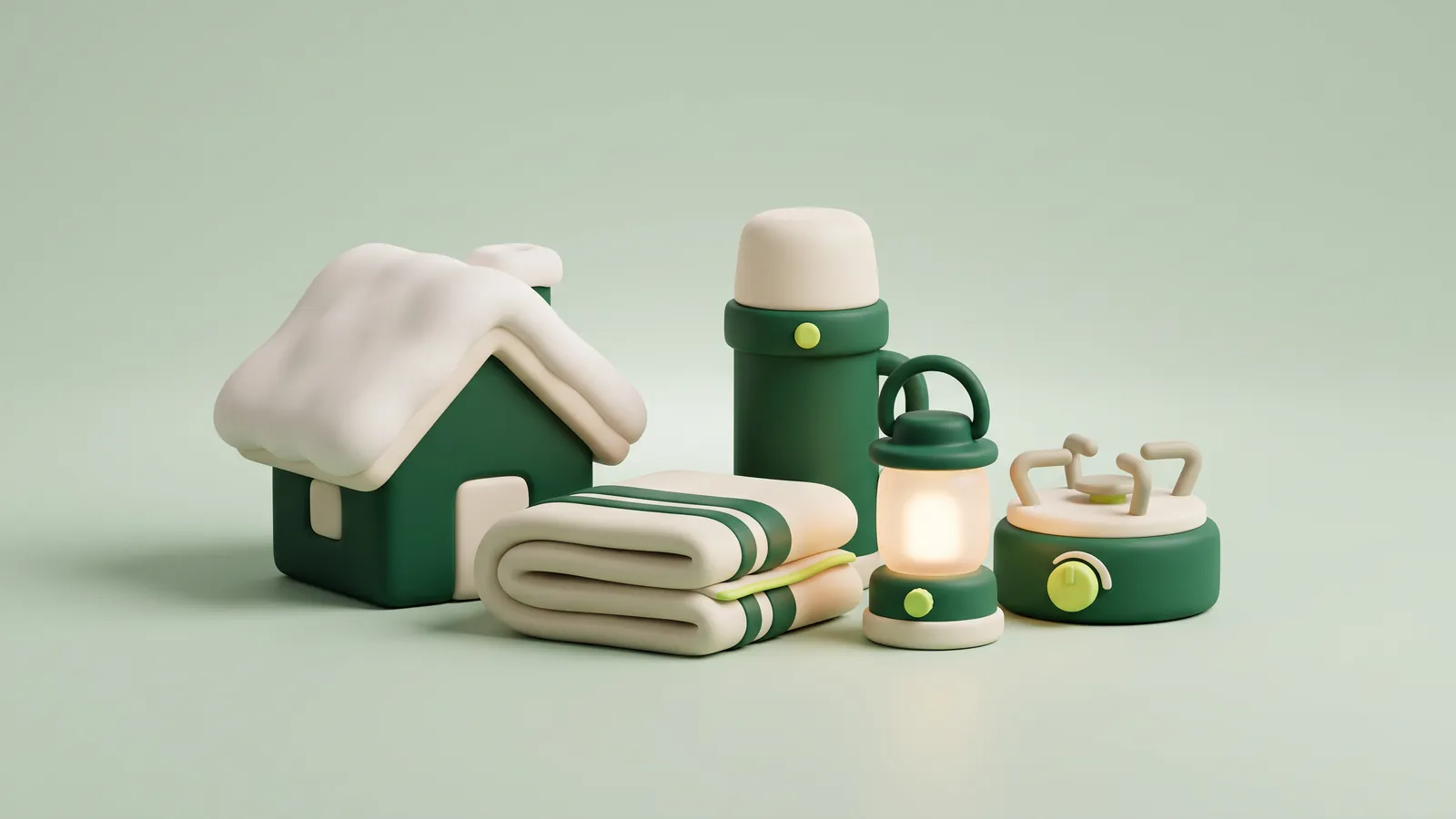
- Pick your warm room now. Choose a small room you can close off, and store bedding and a lantern nearby.
- Stock for several days. Food you can eat cold or heat safely, water, medicines and batteries. Norway’s advice for one week of self-preparedness is a good benchmark, and our guide to power outage preparation covers the rest.
- Think about your car. Ready.gov suggests keeping jumper cables, sand, a torch, warm clothes, blankets, water and snacks in the car, and keeping the tank full.
- Protect babies and medicines. See our guides to babies and pets in emergencies and medications in emergencies.
Want to know where you stand? See how many days your household would last with the free calculator.
Your winter-ready checklist
- Blankets, sleeping bags or duvets, and emergency thermal blankets
- A chosen warm room you can close off
- Torch or battery lantern with spare batteries
- Battery, wind-up or solar radio, and charged power banks
- Carbon monoxide alarms on every level, smoke alarms tested
- Any alternative heater approved for indoor use, with fuel stored safely
- Drinking water: 2 to 3 litres per person per day
- Food and medicines for several days
- Exposed pipes lagged and stopcock located
- Car kit and a full tank in winter
- A plan for who checks on older or vulnerable neighbours
Prepared homes stay warmer and safer through even long outages. Follow the warnings and advice of your national weather service and local authorities.
Sources & further reading
- T&D World – Final report on February 2021 freeze underscores winterization recommendations (FERC–NERC)
- Texas Department of State Health Services – February 2021 winter storm-related deaths (PDF)
- ESB – Power restored to 729,000 customers impacted by Storm Éowyn, 2 February 2025
- RTÉ News – Storm Éowyn clean-up: power, water and broadband, January 2025
- NPR (via HPPR) – Hundreds of thousands without power after a powerful winter storm, 26 January 2026
- Ready.gov – Winter weather
- UKHSA – Top tips for keeping warm and well this winter
- Government of Ireland – Be Emergency Ready booklet (accessible PDF)
- DSB (Norway) – Keeping warm in a power cut
- Uisce Éireann – Simple steps to protect your water supply in freezing weather
Every fact in this post was checked against the sources listed above on 1 November 2026. Advice changes: always follow your local authorities.
Put it into numbers
See how many days your household would last today, and what it costs to reach your goal.